
Tuesdays in Advent, 4
Jesus as a Fiction Writer

I like stories in the Bible that are attributed to Jesus. Of course—and I’m not sure why, I mean I don’t have all of the manuscript evidence to demonstrate or prove anything—when we refer to these stories of Jesus, we don’t call them stories. We were taught to call them parables.
We were not taught to see Jesus as a creative writer. And we certainly don’t want to call any of his teachings—or anything in the Bible, for that matter— “fictions.” That is way too close to calling them lies. After all, we get our word “story” from the Greek word “mythos.” Parable also comes from Greek in a root word, “para,” which is also the root for parallel and parabola, both of which imply lines running parallel to each other. A parable is a religious teaching, something that is drawn as a parallel to where we are.
I still think the idea of calling it fiction works, but I’m not going to start a denomination about it. I also keep in mind that the Bible is full of stories and gets most of its meaning across through them. So here’s my compromise: Jesus is paralleling us with a story. And if, as we say, we can learn a lot about the author from his/her work, well, then, a good way to learn about Jesus can come by studying his stories. Of course, one more difficulty is the widely accepted understanding that Jesus never wrote anything. What we have are all second-hand accounts, what others attributed to him.
The one I want to talk about is famous. I can summarize it quickly. It isn’t a story usually told at Christmas.
A man on a journey is attacked by thieves. They take his money and leave him dying at the side of the road. Travelers pass, including religious leaders, but no one helps. Finally a despised Samaritan comes upon him, takes him to an inn, takes care of his wounds and needs, and sees to his welfare.
The parable—the story—is the way Jesus responds to a question from a lawyer: Who is my neighbor? I don’t know if we can see in this story a mind that has reflected long on Mosaic law, as all Jewish sons were urged to.
And yes, in the story, the neighbor is the foreigner, the Samaritan.
But there is something else here. The Samaritan in the story shows love to a stranger who cannot return it. Love involves caring for someone exposed and harmed, someone who would probably die if not cared for.
I never think about that. But there it is. Our neighbors can be glimpsed even in those we don’t like, but they are also those who are broken, wounded, poor, unable to do anything for us. I’m reminded here of a passage in the Letter of James later in the New Testament that perfect religion is to care for widows and orphans in their distress.
My only addition to this deep discussion and to the theme of love for Advent is as a lover of stories. As a (sometimes) critic, I notice that in this story Jesus is said to have told, he’s not telling an epic or an elaborate fantasy (though there is nothing wrong in that. It’s important to engage imaginatively). He is not doing world building. He is apparently not even into elaborate detailing of furniture, roadside plant life, or color of the eyes. So he’s no Henry James, Wendell Berry, or a romance writer. Nor could his sparce detailing be the result of a modernist technique designed to be ironic about myth or what a previous generation romanticized.
He asks us to imagine what is right there in front of us. In a few quick lines meant to serve the story, we see the world around him where every traveler is vulnerable, and people generally travel in groups. He shows a religious person whose practice is based in fear and doesn’t lead to helping. We might even understand and excuse this religious leader for not wanting to be “unclean” because he has touched a dead person.
I don’t think he even ends the story with a moral or a point. But isn’t it obvious? I guess that’s the clarity that comes from most parables.
I hope that your Christmas and the new year are blessed and full of new purpose for you.
May your holiday season be filled with love and imagination.
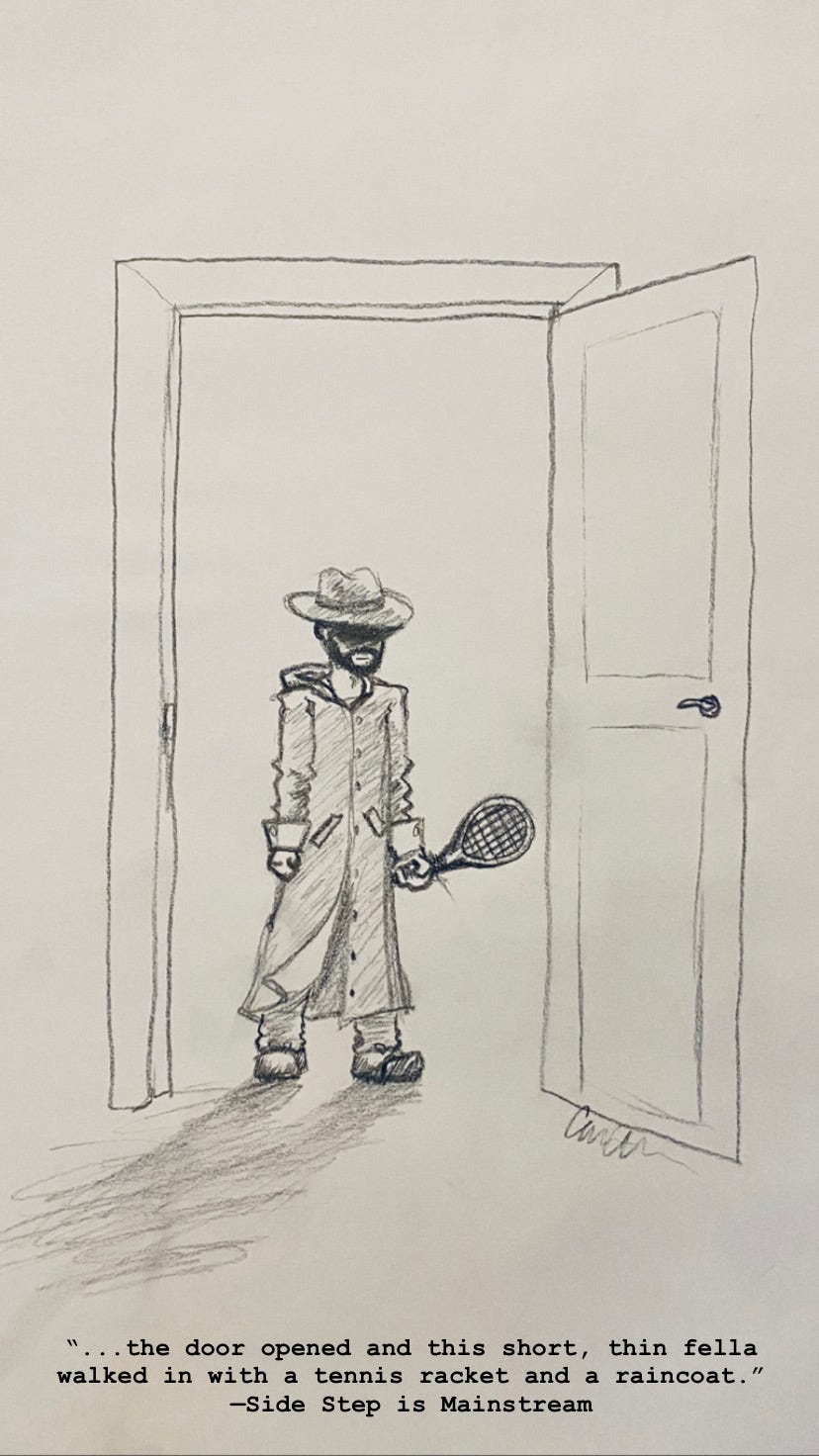
A Southern California Seasonal Imaginary
Our holiday is forecast,
advertisements cozy with associations
of snow under boot, bells on cold,
breath thawing fingers, none of that here today.
I sip coffee at room temp,
in warm wind, eyeing the backdoor
opening, inviting heads to turn
(we all must be Northerners)
to the shoppers who step into the
line for lattes, cranberry and turkey
sandwiches with jalapenos,
the passing of money, passively
fall into humming with the carols,
still have the grief of when
we bought him presents, and
I can only remember the
long ago ones, building toys,
not the later game
equipment.
I’m not able
to see your thinking,
go back alone, almost hear
again our first winter together,
snow crunched and made into
packs, sliding through
traffic stops, what would stay
in some form until late April,
all that we fled, unsentimental,
to sit now among those
bringing this chill here
where we wanted to be,
where more and more, if we
are honest, there are
not holidays
without ghosts.
Friends, the following link is to my favorite Christmas poem. I hope you enjoy it, and I hope your holiday season is filled with hope, peace, joy, and love.
https://poets.org/poem/journey-magi